
Our brand heritage & provenance
The Vetastudio Story
Authentic handmade craftsmanship from Ghana, presented as contemporary, globally desirable fibre art for modern living.
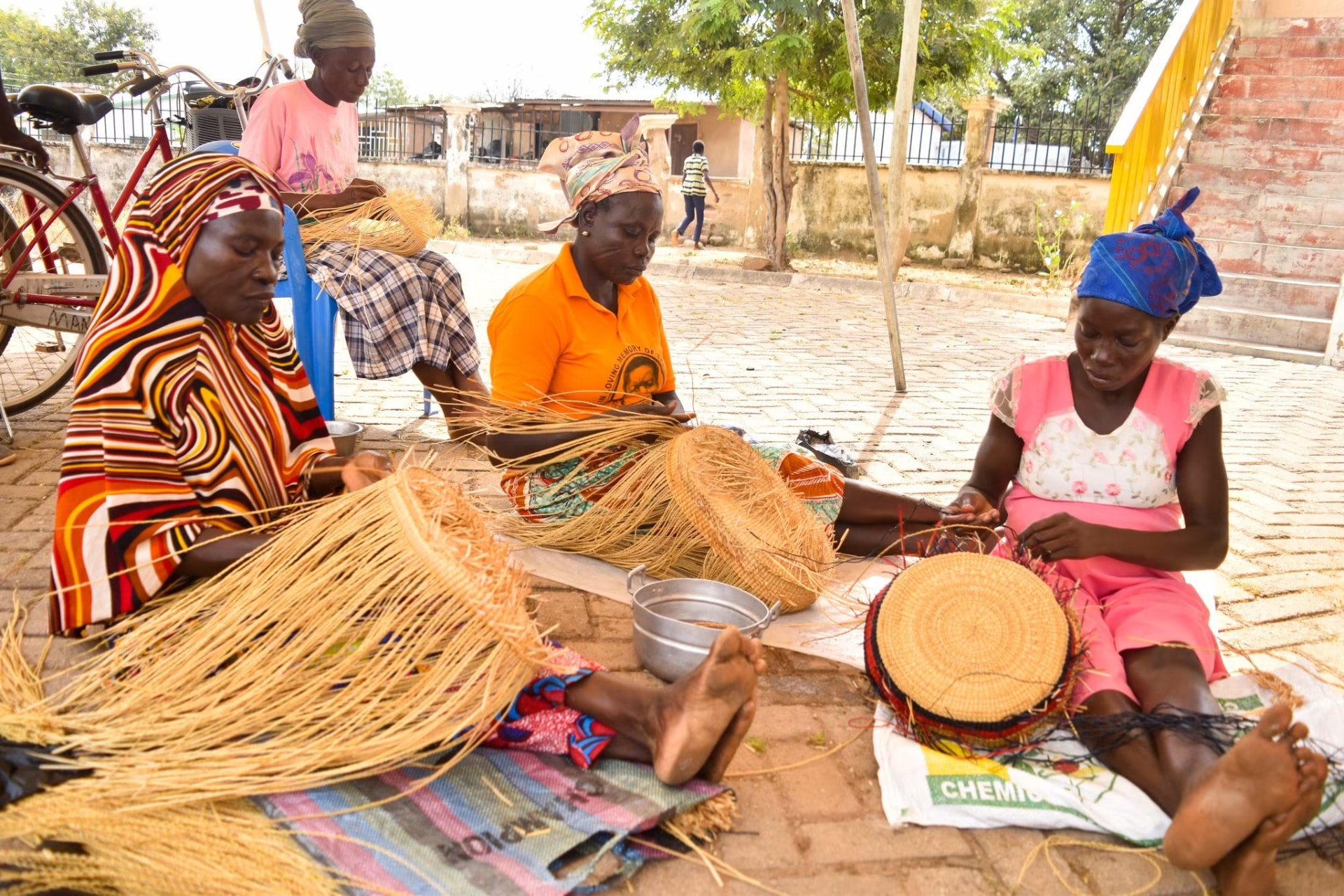
Chapter one — the circle
Work begins as a conversation on the ground
Mornings in the compound start with sorting. Bundles of veta vera grass are shaken out, graded by length and passed around the circle so nobody is left with only the brittle stems. The women weave shoulder to shoulder because pattern counts are spoken aloud, not written down.
This is also where orders are shared out. Cooperative leaders agree who takes which piece based on what each household can carry that week, which is why our lead times move with the season rather than a factory calendar.
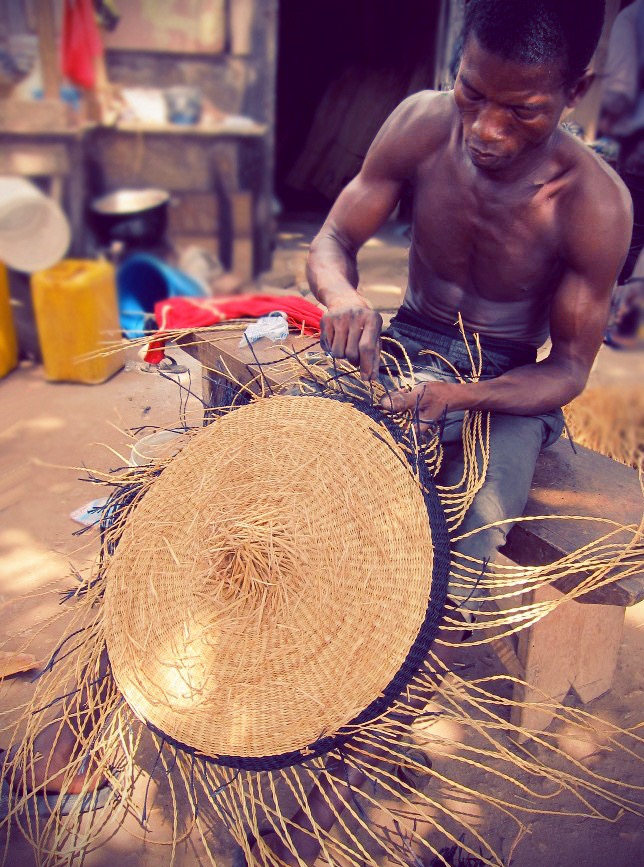
Chapter two — the base
Every basket is decided in its first ten centimetres
A weaver opens with a flat cross of twisted cord on her knee and works outward in a tight spiral. The tension she sets here dictates the final silhouette — a loose start slumps, a hard start refuses to flare. There is no mould and no measuring tape.
If the base is wrong she cuts it out and begins again. It is the reason two baskets ordered in the same colourway will never be identical twins, and the reason we never grade a piece against a machine-made ideal.
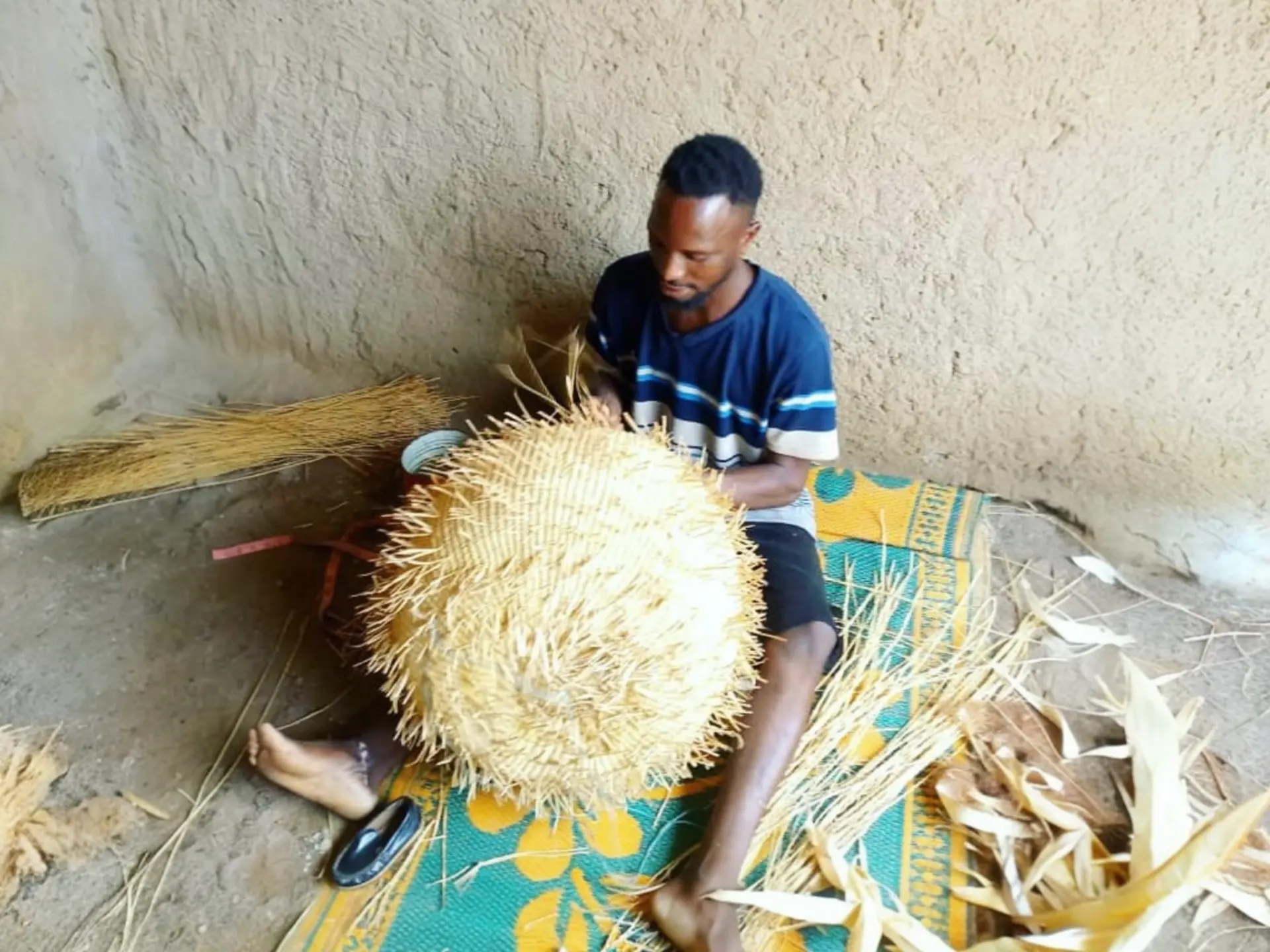
Chapter three — the coil
Colour is counted, not printed
Dyed cord is kept in separate coils beside the weaver: indigo, ochre from root bark, charcoal from iron-rich pots, and undyed straw. Stripes and zebra fringes are produced by switching cord on a remembered count, so the geometry drifts a little as the wall rises.
Those small drifts are the signature of hand work. We keep them rather than trimming them out, and we tell you the dye source for every colourway on the product page.
Chapter four — in motion
How things are done, filmed where it happens
Photographs freeze the craft; the sound of it is closer to the truth. Our own film follows a single afternoon in the compound, from splitting through to the leather-bound rim.
Chapter five — the maker
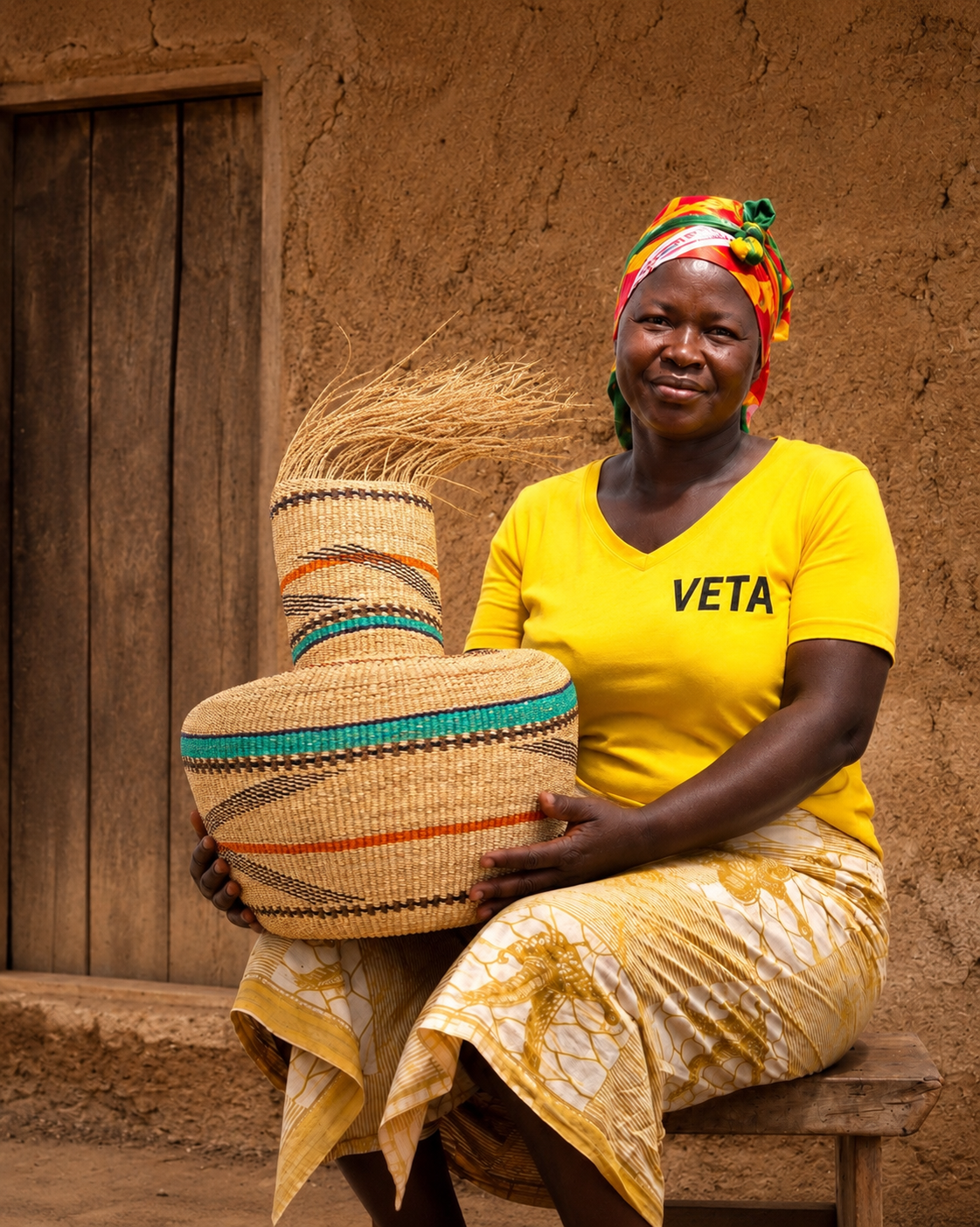
A finished piece leaves with a name attached
When a basket is done it is carried out, checked for a true rim and photographed with the woman who made it. Weavers are paid at collection — before the piece is listed, shipped or sold — at per-piece rates agreed with cooperative leaders each season.
That handover is the whole point of Vetastudio: your basket is traceable to a household in Bolgatanga, Sumbrungu or Zuarungu rather than to an anonymous wholesale crate.
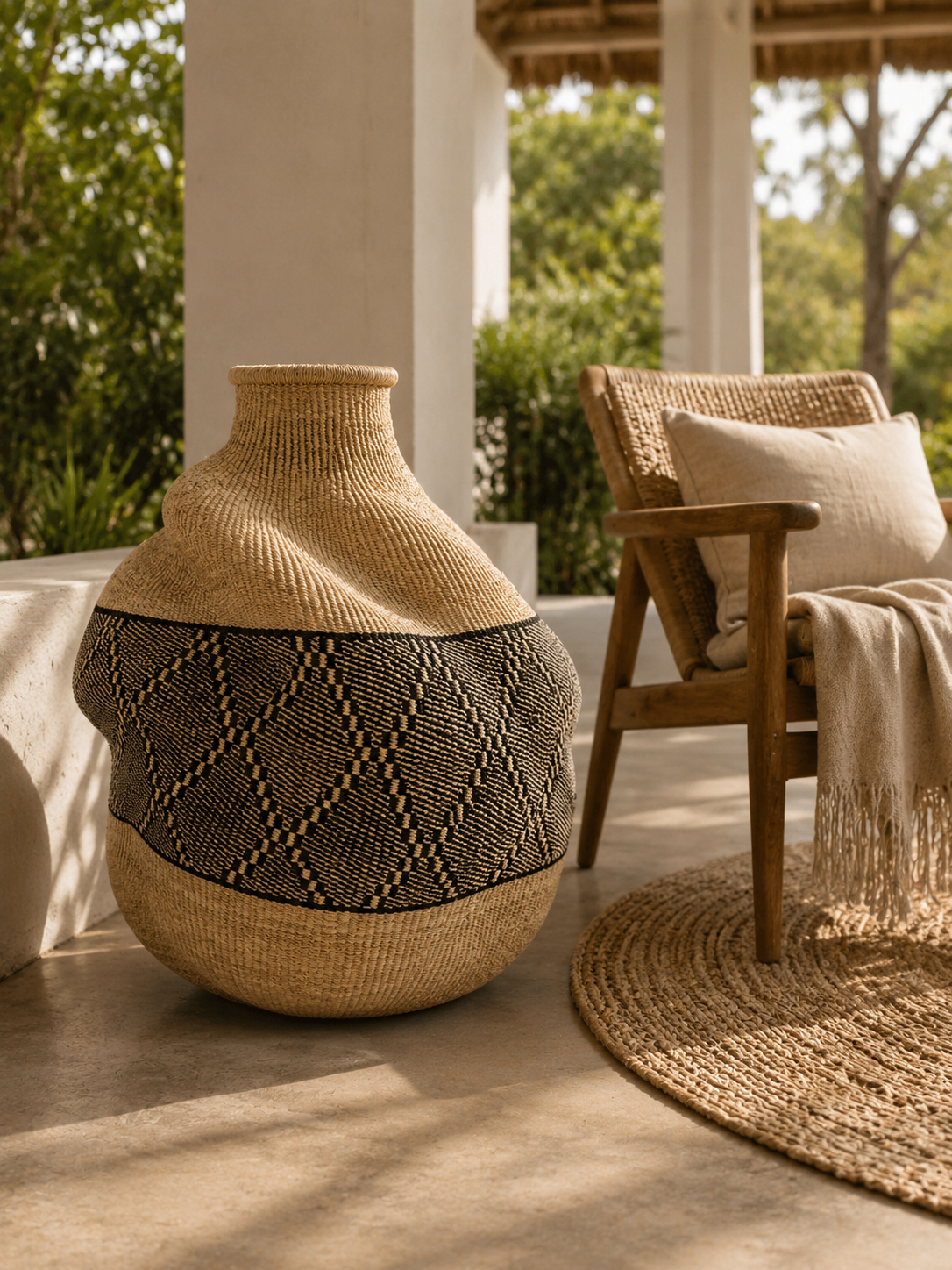
Chapter six — at home
It travels folded, then opens into your room
Grass is shipped compressed to keep freight light and emissions low. Ten minutes with a spray bottle of warm water, a firm push on the walls and a loose stuffing overnight returns the piece to the shape it left the compound in.
After that it wants indirect light and an occasional mist in dry heat. Treated that way, these baskets outlive most of the furniture around them.
Fair-wage transparency
Weavers are paid per piece at 2.4× the regional average, agreed with cooperative leaders before each season and paid on collection, not on sale.
The cooperative model
We buy from four cooperatives across Bolgatanga, Sumbrungu and Zuarungu. Each holds its own dye stock and rotates orders so no household is over-committed.
Carbon-neutral shipping
Baskets travel folded and are reshaped on arrival with a warm water mist. All freight is offset through certified West African reforestation.
Complete transparency
Where your money goes
46%
Artisan payment
14%
Materials & dyes
18%
Freight & offsets
22%
Studio operations